10 September 2026
Las Vegas Manufacturing: Why Shops Are Starting and Relocating Here
Every manufacturer eventually asks the same question about their building: is this still the right place to run the business? For a growing number of shops, the answer is pointing at Las Vegas. It isn't just the low cost of a warehouse lease — it's the combination of where the city sits, how goods move in and out of it, what the weather does to a production schedule, and what the state takes out of a paycheck. Put those together and Las Vegas looks less like a gambling town and more like a logistics hub that happens to have a Strip in the middle of it.
Markets, freight routes, climate, and tax structure — all pointing the same direction.

A Manufacturing Hub in the Making
Las Vegas has spent decades building infrastructure for a different industry — hospitality and entertainment — but the byproduct of that build-out is a city with major-airport air cargo capacity, an interstate spine running straight through the middle of it, and a labor market with room to grow. None of that was built with manufacturing in mind, and manufacturers are benefiting from it anyway.
Southern Nevada's industrial vacancy rate has stayed tight for years as logistics, distribution, and light manufacturing tenants have moved in ahead of the general public catching on. For a shop deciding where to put its next building — or whether to move its existing one — that's worth a closer look before the easy real estate disappears.
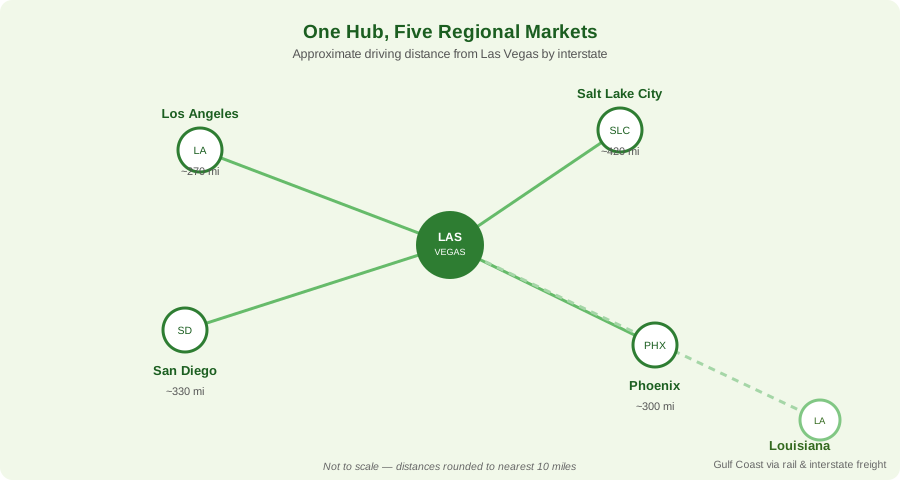
Five major markets, one central location — none of them more than a single day's drive except the farthest.
One Location, Five Regional Markets
Draw a circle around Las Vegas and the map does most of the selling. Los Angeles and its port complex sit roughly 270 miles away — about a four-hour drive. San Diego is another shipping and manufacturing corridor about 330 miles out. Phoenix, a fast-growing manufacturing market in its own right, is roughly 300 miles southeast. Salt Lake City, the gateway to the Mountain West, is about 420 miles north.
Even the Gulf Coast is in reach. Louisiana is a long haul from anywhere in the Southwest, but Las Vegas's position on the interstate freight network and its Union Pacific rail connection put it in the same conversation as cities much farther east — a shop here isn't boxed into a single regional market, it has a genuine shot at all of them.
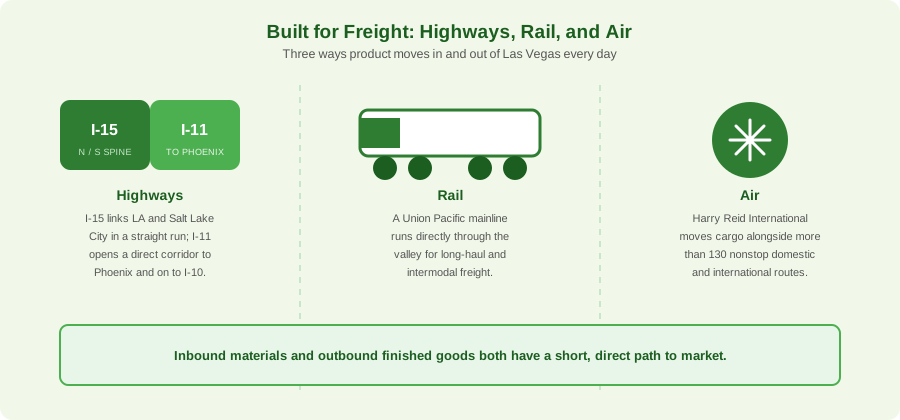
Inbound materials and outbound finished goods both have a short, direct path to market.
Built for Freight: Highways, Rail, and Air
Interstate 15 runs straight through Las Vegas on its way from Southern California to Salt Lake City, which means a truck loaded at a Las Vegas dock is already on the route to two major markets without a single turn. Interstate 11 adds a direct corridor south to Phoenix and on to the broader I-10 freight network that reaches across the southern United States. A Union Pacific mainline runs through the valley as well, giving shops with heavier or bulkier freight a rail option instead of relying on trucking alone.
Harry Reid International Airport rounds it out with cargo capacity alongside its passenger traffic and more than a hundred nonstop routes — useful for a shop that occasionally needs to move a part or a prototype somewhere fast instead of waiting on ground freight.
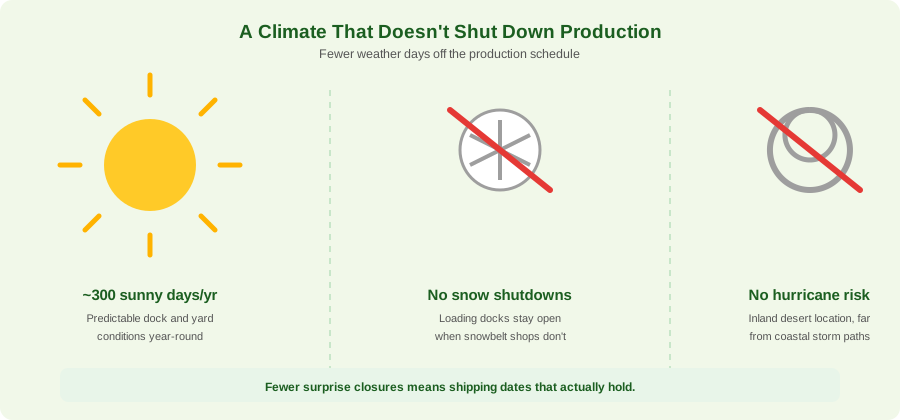
Fewer surprise closures means shipping dates that actually hold.
A Climate That Doesn't Shut Down Production
A shop's schedule is only as reliable as the weather lets it be. Las Vegas sits in the Mojave Desert with roughly 300 sunny days a year, mild winters, and almost no measurable snowfall — which means no plowed-in loading docks, no trucks stuck on a closed interstate, and no production days lost to a storm that shut down the region for a week. It's also inland and far from any coastline, so hurricane risk that regularly disrupts Gulf Coast and Atlantic manufacturers simply isn't part of the planning conversation here.
None of that guarantees an easy summer — a desert climate has its own tradeoffs — but for a shop trying to hit delivery dates, a schedule that isn't at the mercy of a blizzard or a hurricane season is worth quite a lot on its own.
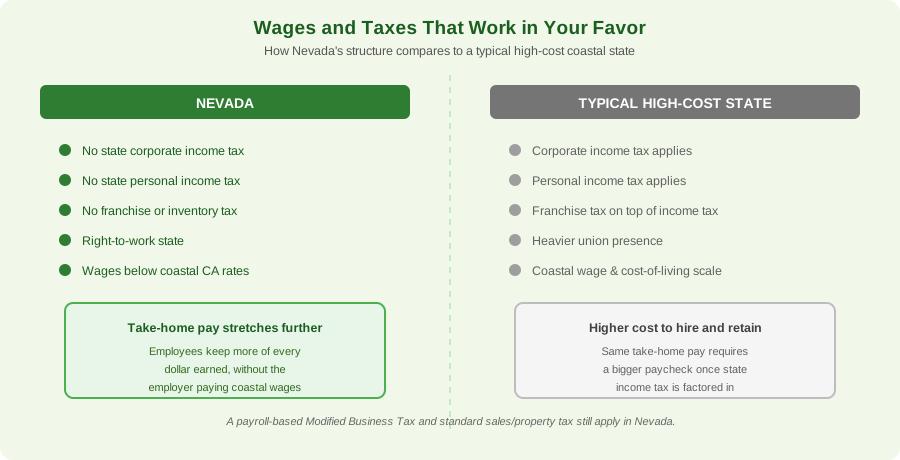
A payroll-based Modified Business Tax and standard sales/property tax still apply in Nevada.
Labor Costs and a Tax Structure That Works in Your Favor
Nevada has no state corporate income tax and no state personal income tax. That second point matters more than it might sound like: it means an employee's paycheck goes further in Las Vegas than the same nominal wage would in a state that also withholds state income tax, which gives a shop room to recruit and retain without having to match wages in Los Angeles or San Diego to compete for the same labor pool. Nevada is also a right-to-work state, and manufacturing wages here typically run below coastal California levels.
None of that means Nevada is tax-free — a payroll-based Modified Business Tax, standard sales tax, and property tax all still apply, and very large employers can run into the state's Commerce Tax. But relative to states layering a corporate income tax, a personal income tax, and a franchise tax on top of each other, the net picture in Las Vegas is a business-friendly one, and it's a meaningful part of why "balmy weather, low wages, and taxation that's just right" keeps showing up in the same sentence as this city.
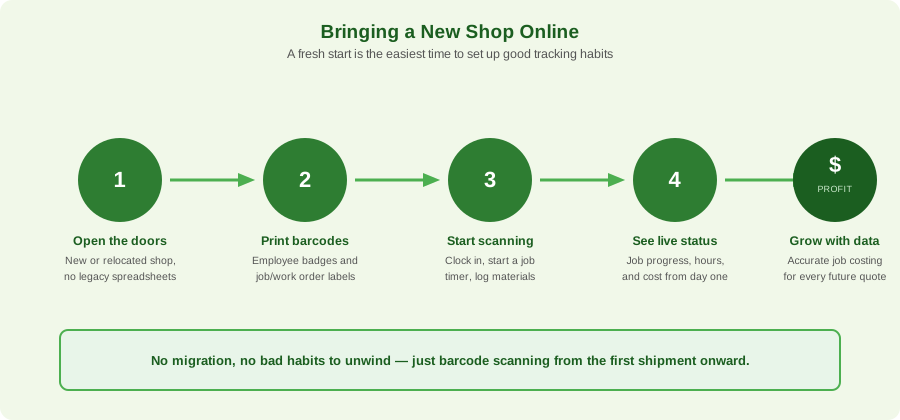
No migration, no bad habits to unwind — just barcode scanning from the first shipment onward.
Bringing a New or Relocated Shop Online with Standard Time®
A new location — or a fresh start after a move — is the easiest moment a shop will ever have to build good tracking habits. There's no legacy spreadsheet to migrate and no years of inconsistent paper timesheets to untangle. Standard Time® is built for exactly that starting point: print barcode labels for employee badges and job or work order tickets, hand out a scanner, and start scanning from day one.
From there, the same barcode scans that clock an employee in and start a job timer also build the job costing data a growing shop needs to quote its next project accurately — labor hours, material usage, and real elapsed time on every job, visible from a live dashboard instead of pieced together at month end. For a shop opening its doors in a new market for the first time, that's a much better place to start than the punch clock and paper trail it's leaving behind. See Creating Users and Employee Barcodes and How to Set Up Users for the first steps.